






NewsDetails
The Ultimate Guide to Precision Welding Table Systems for Modern Fabrication
author:jinchang time:2026-04-18 19:44:46 click:101
In today’s fiercely competitive manufacturing landscape, accuracy and productivity are pivotal to achieving success. Whether your operations focus on metal processing, automobile manufacturing, or custom engineering projects, a precision welding table system has emerged as an indispensable tool for delivering consistent, top-tier results. This article delves into the core aspects of precision welding table systems, assisting industry professionals in grasping their value, key features, and practical applications.
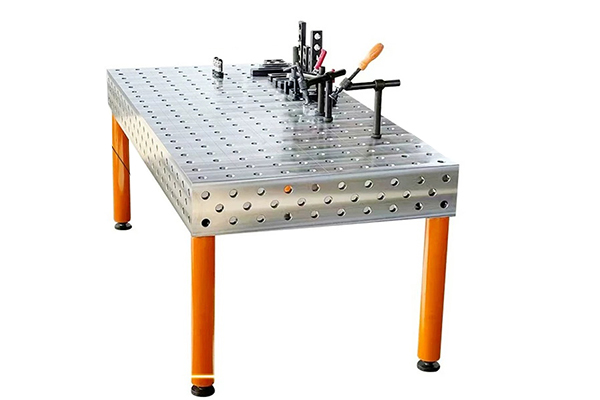
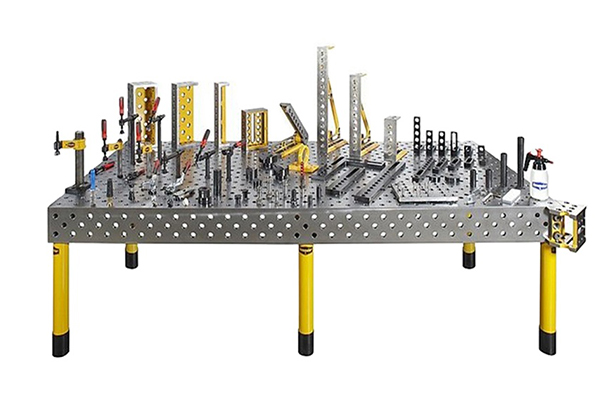
What Is a Precision Welding Table System?
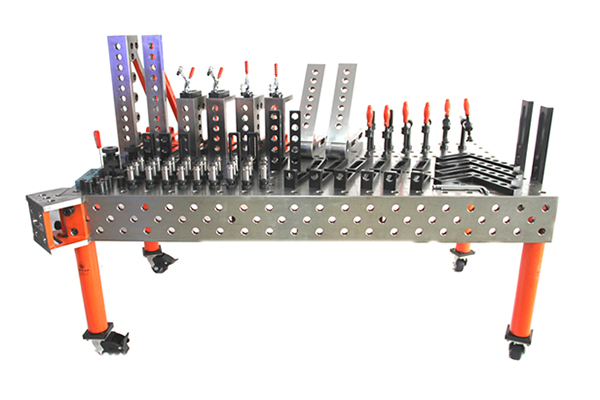
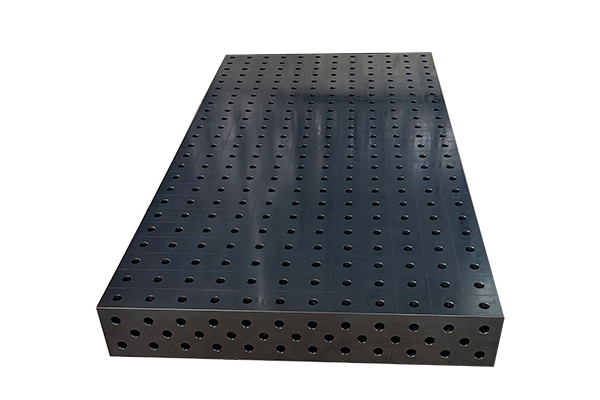
A precision welding table system refers to a flat, highly precise work surface specifically designed to support welding, assembly, and fabrication tasks. Unlike conventional welding benches, these systems are constructed with strict tolerance standards, usually featuring CNC-machined holes arranged in a grid pattern. This grid design enables the use of modular clamping tools, facilitating precise positioning and repeatability in even the most complex fabrication projects. The most distinctive trait of a precision welding table system is its capacity to sustain dimensional accuracy throughout the entire fabrication process. This is particularly crucial in industries where even slight deviations can result in expensive mistakes and rework.
Key Features of Precision Welding Table Systems
One of the most vital features is the modular hole grid system, which is typically available in 16mm or 28mm diameters. These holes allow users to attach clamps, stops, and fixtures in numerous configurations, making the table highly adaptable to different task requirements. Surface flatness is another critical attribute. High-quality precision welding tables are machined to tight tolerance levels, ensuring a perfectly flat working surface. This flatness directly influences the accuracy of welded assemblies, as any unevenness can lead to misalignment during welding. Material quality also plays a significant role in the performance of these systems. Most high-end precision welding tables are crafted from high-strength steel, with surface treatments such as nitriding or plasma nitriding. These treatments enhance wear resistance, minimize spatter adhesion, and prolong the table’s service life.
Benefits for Modern Fabrication
Precision welding table systems greatly boost productivity by providing a stable and repeatable setup, which reduces the time spent on measuring and aligning workpieces. Fabricators can quickly position components and start welding with certainty, eliminating the need for frequent adjustments. Another major advantage is improved precision. With the assistance of modular fixtures and accurate hole positioning, users can maintain consistent dimensions across multiple parts—an essential requirement for batch production and mass manufacturing. Furthermore, these systems enhance workplace efficiency. Their ability to be reconfigured quickly allows fabricators to handle a wide variety of projects without the need for multiple dedicated fixtures, saving both space and costs.
Applications Across Industries
Precision welding table systems are widely utilized across various industries. In automotive manufacturing, they are essential for assembling frames, brackets, and structural components that require tight tolerance control. In the aerospace industry, where precision is non-negotiable, these systems help ensure that components meet stringent engineering standards. Even minor inaccuracies can compromise the safety and performance of aerospace parts, making precision welding tables irreplaceable. They are also valuable in custom metal fabrication, where flexibility is key. Fabricators can adjust the table setup to meet the unique requirements of each project, ranging from artistic metalwork to heavy-duty industrial structures.
Choosing the Right System
Selecting the appropriate precision welding table system depends on several key factors. Table size is a primary consideration, as it should align with the scale of your typical projects. Larger tables offer more workspace but require additional floor space, so it’s important to balance functionality and space constraints. Hole system compatibility is another important factor. Ensure that the table is compatible with the clamping tools and accessories commonly used in your region or industry to avoid compatibility issues. Load capacity and material thickness should also be assessed. Heavy-duty applications demand robust tables that can withstand high loads without deformation, ensuring long-term reliability. Finally, consider the availability of accessories. A high-quality system should offer a wide range of clamps, stops, squares, and extensions to maximize versatility and adaptability to different tasks.
Maintenance and Longevity
Proper maintenance is essential to ensure the long-term performance of a precision welding table system. Regular cleaning prevents the buildup of welding spatter and debris, which can affect surface flatness and accuracy over time. Applying anti-spatter sprays and using protective covers can further extend the table’s lifespan. Periodic inspections of surface flatness and hole integrity are also recommended, especially in high-usage environments where wear and tear are more common. High-quality precision welding table systems are a long-term investment, and with proper care, they can maintain their performance and accuracy for many years.
Conclusion
Precision welding table systems have revolutionized modern fabrication by integrating accuracy, flexibility, and efficiency. Their modular design and high-quality construction make them indispensable for professionals who demand consistent, reliable results. Whether you operate a large-scale manufacturing facility or a small fabrication workshop, investing in a precision welding table system can significantly streamline your workflow, reduce errors, and enhance overall productivity—ultimately giving you a competitive edge in the industry.
References
GB/T 7714: Development of Adjustable Multipurpose Table for Metal Fabrication and Welding Applications. Journal of Manufacturing Processes
MLA:Key Parameters and Selection Criteria of Precision Welding Tables for Modern Manufacturing. Journal of Mechanical Engineering
APA:Application of Precision Welding Table Systems in Aerospace and Automotive Manufacturing. Aerospace Science and Technology
 Recommended Products
 Contact Us
—— Hotline:+86 13833738896
—— Hotline:+86 17332777263
—— Email:gongliliangju@163.com
—— Whatsapp:+8615832706206
—— Whatsapp:+8615931710409
—— Address:Beihan Village, Haocun Town, Botou City, Cangzhou City, Hebei Province, China