





NewsDetails
Hole-based Flexible Welding Platform Installation Guide
author:jinchang time:2026-05-02 13:02:44 click:135
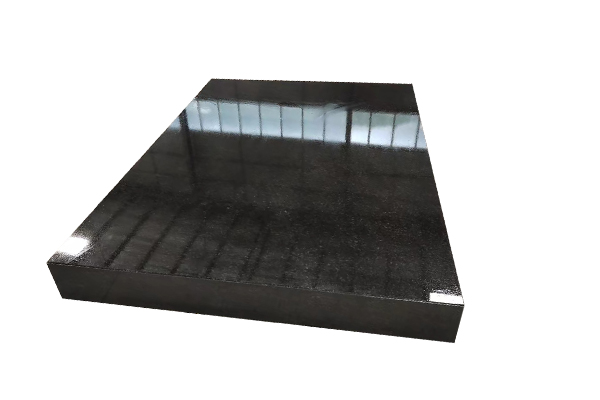
Hole-based Flexible Welding Platform
Foundation Preparation Determines Installation Accuracy
A Hole-based Flexible Welding Platform installation begins with proper foundation preparation. The supporting floor must be stable, vibration-resistant, and capable of bearing the total system load. Any unevenness in the base surface can transfer directly to the platform, compromising precision. Industrial workshops often use reinforced concrete foundations to ensure long-term stability.
Leveling is Critical for Dimensional Precision
Accurate leveling is one of the most important steps in the installation process. Adjustable support legs or shims are typically used to achieve a perfectly horizontal surface. Even slight deviations can affect weld alignment and assembly tolerances. Professional installers rely on laser leveling tools to ensure accuracy within tight limits.
Modular Assembly Enables Scalable Configuration
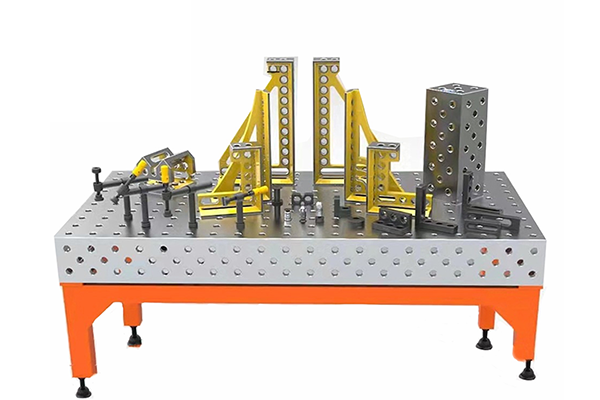
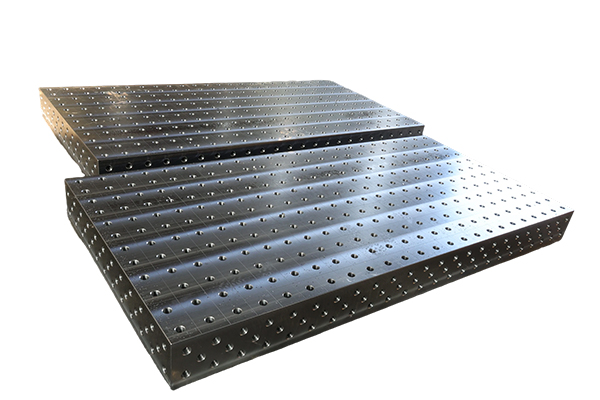
The modular nature of a Hole-based Flexible Welding Platform allows for flexible assembly. Individual table sections can be combined to create larger working areas. During installation, it is essential to ensure that all modules are aligned and securely fastened to prevent movement during operation.
Grid Hole System Supports Versatile Fixturing
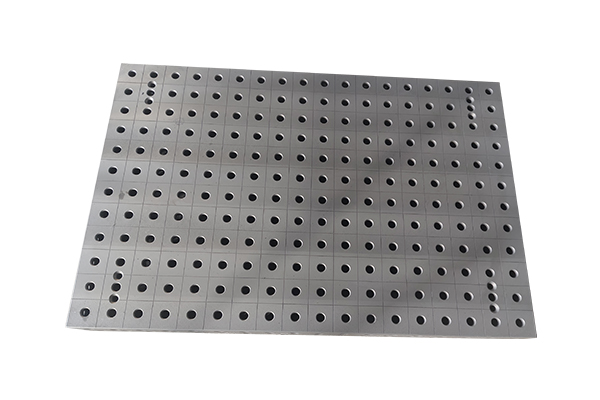
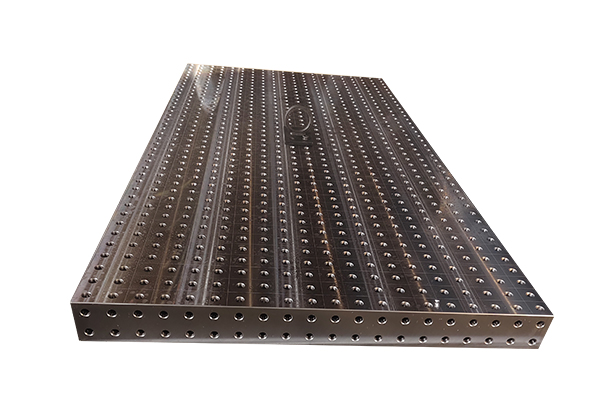
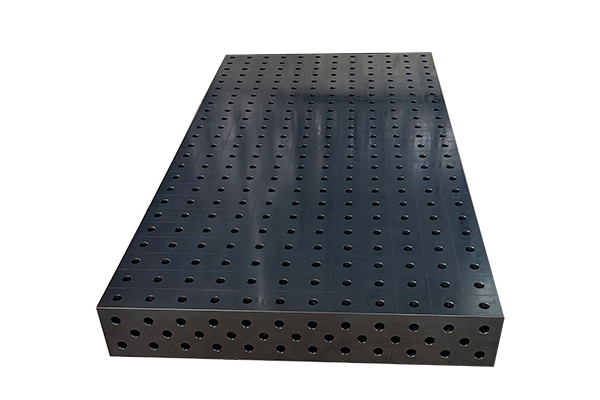
The defining feature of the platform is its grid hole system. These precision-machined holes allow for the placement of clamps, fixtures, and positioning elements. Proper alignment of the grid across modules ensures compatibility and repeatability, which is essential for high-precision fabrication.
Clamping and Fixture Integration Enhances Stability
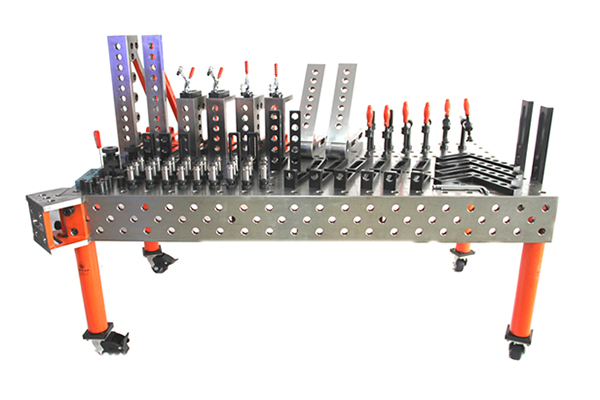
Once the platform is assembled, clamping systems are installed. These components secure workpieces during welding, preventing movement and distortion. A well-configured clamping setup improves both accuracy and efficiency, especially in repetitive production tasks.
Alignment Verification Ensures System Accuracy
After assembly, alignment verification is conducted to confirm that all components are properly positioned. This includes checking flatness, perpendicularity, and parallelism. Any misalignment must be corrected before the platform is put into operation to avoid defects in welded structures.
Surface Protection Maintains Long-Term Performance
Surface treatment and maintenance are important for preserving the platform’s accuracy. Anti-spatter coatings and regular cleaning prevent buildup that could affect flatness. Maintaining a clean working surface ensures consistent performance over time.
Load Distribution Prevents Structural Deformation
Proper load distribution across the platform is essential to avoid localized stress. Heavy workpieces should be positioned to evenly distribute weight. This practice helps maintain structural integrity and prolongs the lifespan of the system.
Integration with Automation Systems Improves Efficiency
Modern Hole-based Flexible Welding Platforms are often integrated with robotic welding systems. Accurate installation ensures compatibility with automated equipment, enabling precise and repeatable operations in high-volume production.
Maintenance Practices Sustain Precision
Regular inspection and maintenance are necessary to ensure continued accuracy. Checking for wear, re-leveling when necessary, and replacing damaged components help maintain the platform’s performance.
Hole-based Flexible Welding Platform
References
Cary, H.B. Modern Welding Technology
Lancaster, J.F. The Physics of Welding
 Recommended Products
 Contact Us
—— Hotline:+86 13833738896
—— Hotline:+86 17332777263
—— Email:gongliliangju@163.com
—— Whatsapp:+8615832706206
—— Whatsapp:+8615931710409
—— Address:Beihan Village, Haocun Town, Botou City, Cangzhou City, Hebei Province, China