






NewsDetails
Flexible Modular Fixturing System: Setup Tips That Save Hours on Every Job
author:jinchang time:2026-06-02 16:33:50 click:106
In modern manufacturing, the ability to switch between workpieces quickly without sacrificing hold-down accuracy is a competitive advantage. A flexible modular fixturing system delivers exactly that — a reconfigurable workholding platform that adapts to different part geometries, reduces changeover time, and eliminates the need for dedicated custom fixtures for every new job. This article shares field-tested flexible modular fixturing system setup tips that help shops cut fixture-build hours, improve repeatability, and get more value from their investment.
What Is a Flexible Modular Fixturing System?
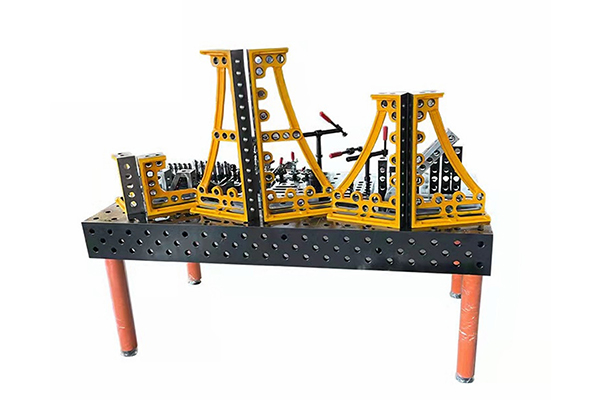
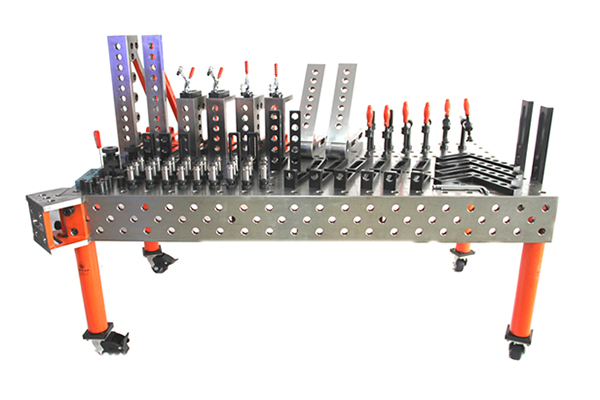
A flexible modular fixturing system is a workholding solution built from standardized, interchangeable components — base plates with grid holes, modular clamps, adjustable supports, locating pins, and quick-release straps. Unlike dedicated fixtures that serve a single part, a modular system lets you assemble, adjust, and disassemble fixture configurations in minutes. According to a study published in the International Journal of Advanced Manufacturing Technology, modular fixturing can reduce fixture preparation time by up to 70% compared to traditional dedicated fixtures (Bi & Zhang, 2001).
Setup time is non-value-added time. Every minute spent adjusting clamps, repositioning supports, or troubleshooting part misalignment is a minute the machine sits idle. In high-mix, low-volume (HMLV) environments — where job shops may change fixtures 10–20 times per week — poor setup discipline erodes spindle utilization. A well-documented setup routine for your flexible modular fixturing system turns fixture changeover from a 45-minute craft exercise into a 10-minute repeatable procedure.
Tip 1: Start With a Standardized Base Plate Grid
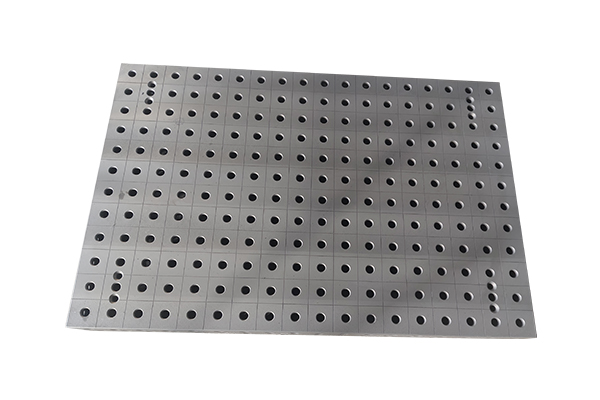
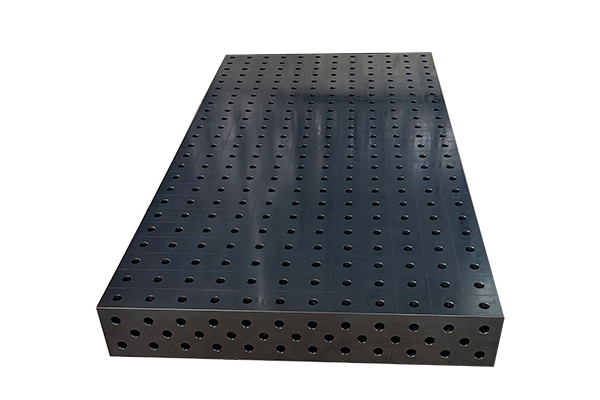
The foundation of every flexible modular fixturing system is the base plate. Choose a plate with a consistent hole grid (e.g., 50 mm or 2-inch spacing) that matches your clamping components. Consistent grid spacing means you can document clamp positions as grid coordinates (e.g., "B3, D7") rather than measurements. This makes setup sheets readable by any operator, reduces errors, and allows fixture configurations to be archived and reused.
Tip 2: Document Every Fixture Configuration
One of the most overlooked flexible modular fixturing system setup tips is record-keeping. Photograph the completed fixture setup from multiple angles, write down grid positions for every clamp and support, and store this in a digital library linked to the part number. When the same part returns months later, an operator can reconstruct the fixture in minutes instead of starting from scratch. Shops that implement this practice report a 40–60% reduction in repeat-setup time.
Tip 3: Pre-Stage Clamping Kits by Part Family
Group workpieces into families that share similar clamping requirements. Pre-assemble clamping sub-assemblies for each family and store them in labeled bins near the workstation. When a job from that family comes up, the operator grabs the pre-staged kit and mounts it on the base plate — turning what could be a 30-minute build into a 5-minute installation. This approach maximizes the inherent flexibility of a flexible modular fixturing system.
Tip 4: Use Quick-Release Clamps for Frequent Changeovers
Standard hex-bolt clamps are fine for long production runs, but they slow you down in HMLV environments. Quick-release toggle clamps, lever-actuated strap clamps, and hydraulic edge clamps let operators secure and release workpieces in seconds without tools. Swapping just four bolt clamps for toggle clamps on a typical flexible modular fixturing system setup can save 3–5 minutes per changeover — which compounds significantly over a week of frequent job changes.
Tip 5: Verify Datum Alignment Before Clamping
Even the best modular fixture fails if the workpiece datum isn't aligned to the machine coordinate system. Before tightening any clamp, use a dial indicator or touch probe to verify that the part's datum surfaces sit correctly against the locating elements on your flexible modular fixturing system. This 60-second check prevents scrapped parts and machine crashes that cost far more than the time saved by skipping verification.
Tip 6: Keep the System Clean and Organized
Chips, coolant residue, and debris in base plate holes compromise clamp seating and locating accuracy. Make it a habit to blow off the base plate and brush out holes before every new setup. Organize clamps, supports, and hardware in shadow-board tool drawers so components are visible and accessible. A clean, organized flexible modular fixturing system is faster to set up and produces more consistent results.
Tip 7: Train Multiple Operators on the Same Setup Procedures
A setup procedure only works if every operator follows it. Develop a one-page setup SOP for each fixture family, walk every machinist through it, and post laminated copies at the workstation. When any operator can reproduce a fixture configuration to the same standard, your flexible modular fixturing system delivers its full promise: consistent quality regardless of who is on shift.
FAQ: Flexible Modular Fixturing System Setup Tips
How long does it take to set up a flexible modular fixturing system?
A typical first-time setup takes 15–30 minutes depending on part complexity. With documented procedures and pre-staged kits, repeat setups drop to 5–10 minutes — compared to several hours for building a dedicated custom fixture.
Can a flexible modular fixturing system hold heavy workpieces?
Yes. Modular systems with heavy-duty base plates (e.g., 50 mm thick cast iron or steel) and high-force hydraulic clamps can securely hold workpieces weighing several hundred kilograms. Always verify clamp force ratings against your workpiece weight and cutting forces.
What industries benefit most from modular fixturing?
Job shops, aerospace subcontractors, automotive prototype shops, and general engineering workshops with high-mix, low-volume production benefit the most. Any environment where fixture changeovers happen frequently will see rapid ROI.
Is a flexible modular fixturing system cost-effective for small shops?
Absolutely. While the upfront investment is higher than building a single dedicated fixture, the payback comes from eliminating the need for dozens of custom fixtures. Most small shops report ROI within 6–12 months through reduced fixture-build labor and faster changeovers.
How do I maintain repeatability across multiple setups?
Use the same base plate, document grid coordinates, verify datum alignment before clamping, and follow a standardized SOP. With these practices, positional repeatability within ±0.02 mm is achievable on a well-maintained modular fixturing system.
Conclusion
A flexible modular fixturing system is only as effective as the setup discipline behind it. By standardizing your base plate grid, documenting configurations, pre-staging clamping kits, using quick-release hardware, verifying datums, keeping components clean, and training all operators on consistent procedures, you unlock the full time-saving and quality-improving potential of modular workholding. Implementing these flexible modular fixturing system setup tips can reduce your changeover time by 50–70%, improve part-to-part consistency, and deliver measurable ROI within the first year.
References
Bi, Z.M. & Zhang, W.J. (2001). Flexible fixture design and automation: Review and future directions. International Journal of Advanced Manufacturing Technology, 17(4), 266–277.
Kumar, S. & Nee, A.Y.C. (1995). Development of a modular fixture design system. Journal of Intelligent Manufacturing, 6(4), 263–274.
Boerma, J.R. & Kals, H.J.J. (1989). FIXES, a system for automatic selection of set-up clamping elements. Annals of the CIRP, 38(1), 443–446.
Rong, Y. & Bai, Y. (2000). Modular fixture element assembly and accuracy analysis. International Journal of Production Research, 38(14), 3103–3114.
 Recommended Products
 Contact Us
—— Hotline:+86 13833738896
—— Hotline:+86 17332777263
—— Email:gongliliangju@163.com
—— Whatsapp:+8615832706206
—— Whatsapp:+8615931710409
—— Address:Beihan Village, Haocun Town, Botou City, Cangzhou City, Hebei Province, China