





NewsDetails
Flexible Modular Fixturing System in Welding
author:jinchang time:2026-05-05 14:20:56 click:184
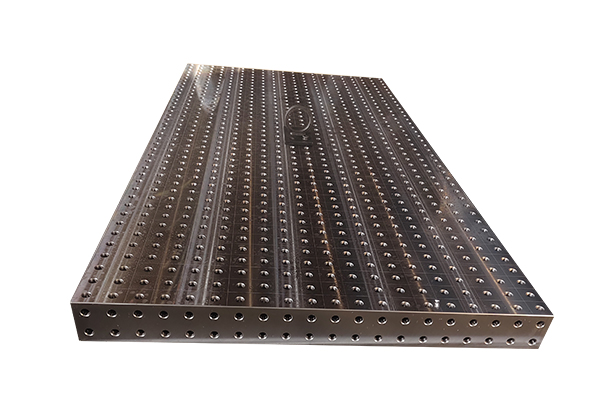
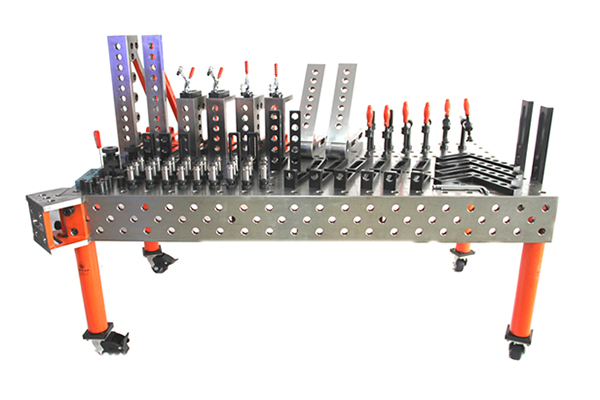
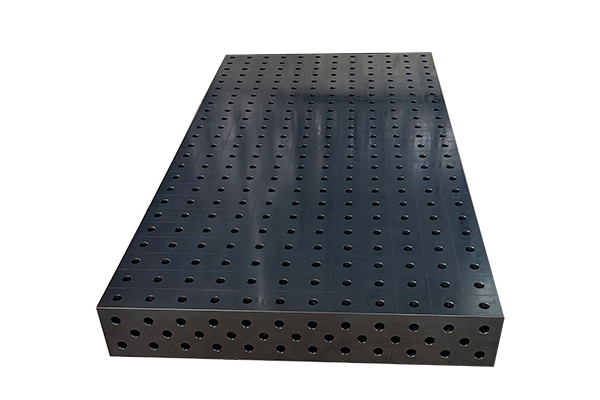
Flexible Modular Fixturing System
Modular Architecture Enables Adaptive Manufacturing
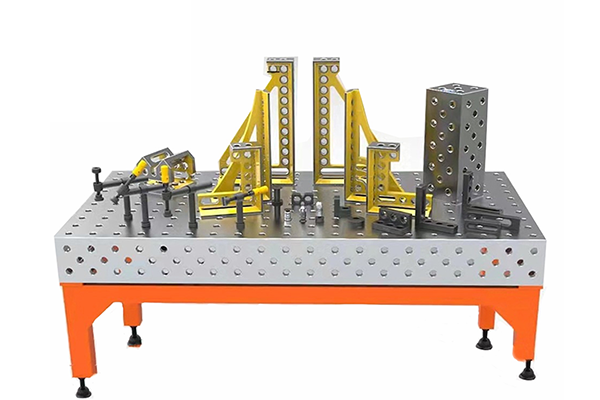
A Flexible Modular Fixturing System is built around standardized components that can be assembled and reconfigured to suit different welding tasks. Unlike traditional fixed fixtures, this modular approach allows manufacturers to adapt quickly to changing product designs. The ability to reuse components across multiple setups significantly improves operational flexibility, especially in environments where product variation is high.
Standardized Components Ensure Repeatable Positioning
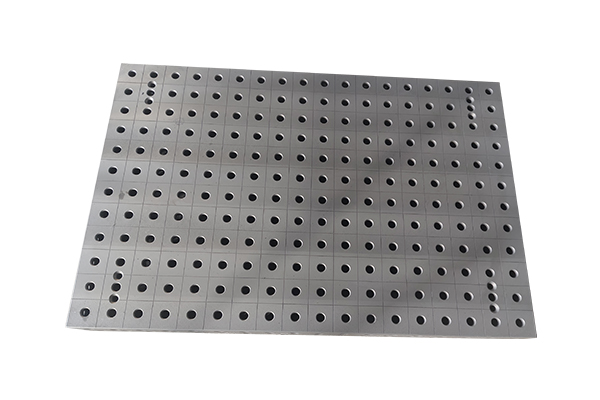
Precision in welding automation depends heavily on accurate part positioning. Modular fixturing systems use standardized elements such as locating pins, stops, and brackets to achieve consistent alignment. These components are manufactured with tight tolerances, ensuring that each setup delivers repeatable results. This consistency is essential for maintaining product quality across large production runs.
Integration with Robotic Systems Enhances Automation Efficiency
Modern welding operations increasingly rely on robotic systems for improved productivity. A Flexible Modular Fixturing System is designed to integrate seamlessly with robotic welding cells. Standardized interfaces allow robots to interact with fixtures without requiring extensive reprogramming. This compatibility reduces setup complexity and supports efficient automation workflows.
Reduced Setup Time Accelerates Production Cycles
One of the most significant advantages of modular fixturing is the reduction in setup time. Traditional fixtures often require extensive preparation and adjustment, while modular systems can be assembled quickly using pre-engineered components. This efficiency enables faster transitions between production batches, improving overall throughput.
Structural Rigidity Maintains Precision Under Load
Despite their flexibility, modular fixturing systems are engineered to provide high structural rigidity. This ensures that workpieces remain stable during welding, even under dynamic loads and thermal expansion. Rigid structures prevent movement that could compromise weld quality, making them suitable for precision applications.
Versatility Supports Complex Welding Geometries
Manufacturing environments often involve complex part geometries that require specialized fixturing solutions. Modular systems can be configured to accommodate these complexities without the need for custom-built fixtures. This versatility reduces design time and allows engineers to focus on optimizing production processes.
Cost Efficiency Through Component Reusability
Cost reduction is a key benefit of adopting a Flexible Modular Fixturing System. Reusable components eliminate the need for dedicated fixtures for each product, reducing capital investment. Over time, this approach leads to significant cost savings, particularly in industries with diverse product lines.
Scalability Meets Expanding Production Demands
As production requirements grow, modular fixturing systems can be expanded by adding additional components or modules. This scalability ensures that the system can adapt to increased demand without requiring a complete redesign. It also allows manufacturers to incrementally invest in their infrastructure.
Quality Consistency Improves Product Reliability
Consistent fixturing leads to consistent weld quality. By ensuring precise positioning and stability, modular systems reduce variability in the welding process. This reliability is essential for meeting industry standards and maintaining customer trust.
Ergonomic Design Enhances Operator Efficiency
In addition to technical performance, modular fixturing systems are designed with operator ergonomics in mind. Easy-to-handle components and intuitive assembly processes reduce physical strain and improve workflow efficiency. This contributes to a safer and more productive work environment.
Compatibility with Digital Manufacturing Systems
Advanced manufacturing increasingly incorporates digital tools such as CAD and simulation software. Modular fixturing systems can be designed and optimized digitally before physical implementation. This integration improves accuracy and reduces trial-and-error during setup.
Maintenance Simplicity Supports Long-Term Use
Maintenance of modular fixturing systems is straightforward due to their standardized components. Individual parts can be replaced or repaired without affecting the entire system. This reduces downtime and ensures long-term reliability.
Future-Proofing Through Flexible Design
The adaptability of modular fixturing systems makes them a future-proof solution for welding automation. As product designs evolve, the system can be reconfigured to meet new requirements without significant investment. This flexibility provides long-term value for manufacturers.
Flexible Modular Fixturing System
References
Groover, M.P. Automation, Production Systems, and Computer-Integrated Manufacturing
Kalpakjian, S. & Schmid, S. Manufacturing Engineering and Technology
Boothroyd, G. Product Design for Manufacture and Assembly
 Recommended Products
 Contact Us
—— Hotline:+86 13833738896
—— Hotline:+86 17332777263
—— Email:gongliliangju@163.com
—— Whatsapp:+8615832706206
—— Whatsapp:+8615931710409
—— Address:Beihan Village, Haocun Town, Botou City, Cangzhou City, Hebei Province, China