





NewsDetails
Flexible Modular Fixturing System for Heavy Parts: A Practical Guide
author:jinchang time:2026-06-02 11:11:29 click:77
Handling heavy workpieces - components weighing 200 kilograms or more - presents distinct challenges that standard fixture systems cannot address. Weight creates forces that test every aspect of workholding: base plate rigidity, clamp holding power, support stability, and operator safety. A flexible modular fixturing system designed for heavy parts provides the structural capacity and clamping force to secure large components through demanding welding, machining, and assembly operations. This article covers how a flexible modular fixturing system for heavy parts works in practice and how to set it up for safe, reliable performance.
What Defines a Heavy Parts Fixturing Application?
Heavy parts fixturing typically involves workpieces exceeding 200 kg in weight, though the threshold varies by industry. In structural steel fabrication, heavy means 500 kg or more. In aerospace, components over 100 kg may qualify. The defining characteristic is not weight alone but the combination of weight with cutting or welding forces. A flexible modular fixturing system for heavy parts must resist not only gravitational loads but also dynamic loads from machining cutting forces or welding thermal cycles that can multiply effective loads by 2-3 times the static weight.
Base Plate Requirements for Heavy-Duty Applications
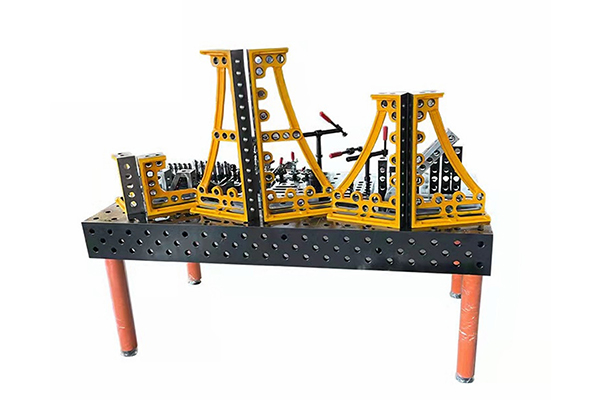
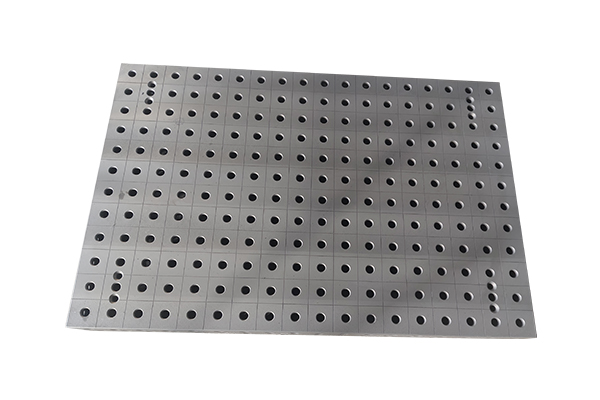
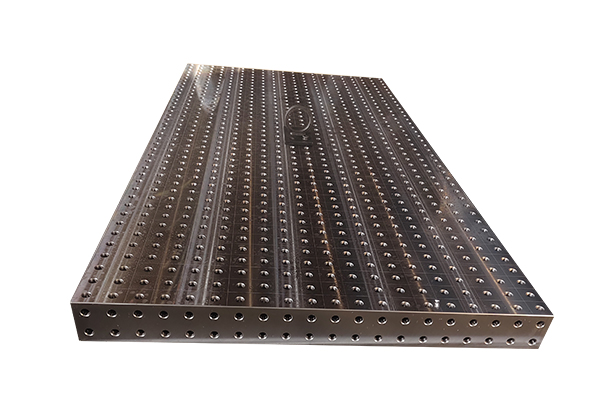
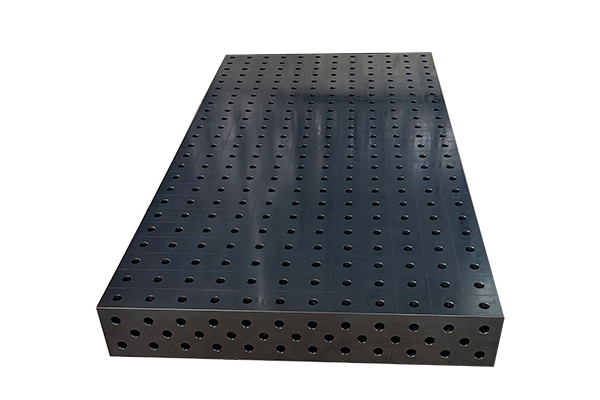
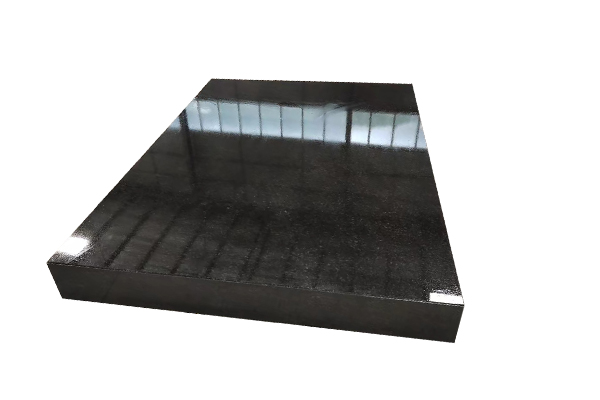
The base plate bears the entire load in a flexible modular fixturing system for heavy parts. Heavy-duty plates are typically 40-60 mm thick, manufactured from cast iron or hardened steel, and feature reinforced rib structures on the underside for additional stiffness. Hole patterns are often spaced at 100 mm or 150 mm centers rather than 50 mm to accommodate larger components and provide stronger mounting points. Surface flatness must maintain 0.05 mm per meter or better under load - a more demanding specification than lightweight plates because deflection under heavy component weight can shift datum positions significantly.
Clamping Force: Holding Heavy Parts Secure
Standard toggle clamps and strap clamps cannot generate sufficient holding force for heavy components. A flexible modular fixturing system for heavy parts relies on hydraulic clamps, pneumatic toggle clamps with force multiplication, and heavy-duty screw clamps with extended arm leverage. Hydraulic clamps deliver 10-50 kN of holding force per clamp, sufficient to resist machining cutting forces and welding-induced movement. Calculate total required clamping force based on workpiece weight (multiply by 2-3 for dynamic loads) and distribute clamps evenly across the fixture to prevent localized stress concentrations.
Support Strategies for Large, Heavy Components
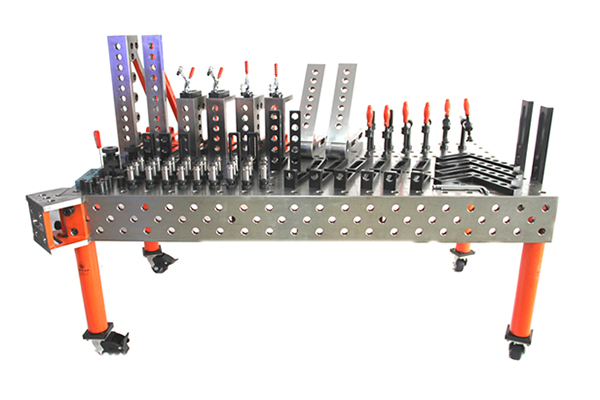
Proper support is as critical as proper clamping for a flexible modular fixturing system for heavy parts. Use support posts rated for the expected load, positioned at the component's center of gravity and at key structural points. Adjustable height support posts with locking mechanisms allow fine-tuning of workpiece position while maintaining load-bearing stability. For very large components, employ adjustable-height support towers that can bear loads of 5,000 kg or more. Always position supports symmetrically to prevent the workpiece from tilting or shifting during operations.
Safety Considerations for Heavy Parts Fixturing
Safety is non-negotiable when working with heavy components on a flexible modular fixturing system. Follow these essential practices: (1) Verify clamp force with a torque wrench or hydraulic pressure gauge before every operation. (2) Use secondary retention devices (safety chains or straps) as backup against clamp failure. (3) Position operators clear of potential drop zones when loading and unloading. (4) Use overhead cranes or gantry systems for part handling - never attempt to manually position heavy workpieces. (5) Establish maximum load ratings for every base plate and component, and never exceed them.
Application: Heavy Structural Steel Welding
A bridge component fabricator welding steel girders weighing 800-1,500 kg per section adopted a flexible modular fixturing system for heavy parts to replace an aging collection of dedicated fixtures. Results: fixture changeover time dropped from 4 hours to 25 minutes, fixture-related scrap decreased by 65 percent, and the shop eliminated $45,000 in annual dedicated fixture maintenance costs. Heavy-duty hydraulic clamps provided consistent holding force regardless of operator skill, and the modular approach accommodated design changes mid-project without additional tooling investment.
Application: Heavy Equipment Frame Assembly
A construction equipment manufacturer assembling excavator frames (400-600 kg) uses a flexible modular fixturing system with multiple base plates arranged in an L-shaped configuration. This layout supports the frame at three critical datum points simultaneously while allowing welders access from all sides. Adjustable support posts align the frame to the assembly specification, and hydraulic edge clamps secure each joint location before welding. The modular system handles three different excavator frame models with the same set of components, reducing dedicated fixture inventory by 85 percent.
FAQ: Flexible Modular Fixturing System for Heavy Parts
What is the maximum weight a flexible modular fixturing system can hold?
It depends on the specific system configuration. Heavy-duty modular platforms with 50-60 mm cast iron base plates and hydraulic clamps typically support workpieces up to 2,000-3,000 kg. Always verify the manufacturer's rated load capacity for your specific base plate and component combination.
Are hydraulic clamps necessary for heavy parts fixturing?
For workpieces over 200 kg, hydraulic clamps are strongly recommended. They deliver consistent, high-force clamping that manual clamps cannot achieve. For lighter heavy parts (100-200 kg), heavy-duty screw clamps may suffice, though they require more operator effort and deliver less consistent force.
How does a modular system compare to a dedicated heavy-duty fixture?
Dedicated heavy fixtures offer marginally higher rigidity for a single part but cost $10,000-$50,000 and take 6-12 weeks to build. A modular system handles multiple heavy parts with one investment and enables same-day configuration changes.
Can a modular fixturing system handle dynamic loads from machining?
Yes, provided the system is rated for the expected cutting forces. Calculate total dynamic load (workpiece weight multiplied by dynamic factor, plus cutting forces) and ensure all base plates, supports, and clamps are rated above this total with a safety margin of at least 1.5 times.
Conclusion
A flexible modular fixturing system for heavy parts delivers the structural capacity, clamping force, and positional accuracy that heavy component operations demand - without the cost and lead time of dedicated fixtures. By selecting appropriate base plates, using hydraulic clamping systems, distributing supports strategically, and maintaining strict safety protocols, manufacturers can securely hold workpieces weighing hundreds or thousands of kilograms while maintaining the flexibility to reconfigure for different parts. The result: reduced tooling investment, faster changeovers, and consistent quality on heavy-duty applications.
References
Rong, Y. and Bai, Y. (2000). Modular fixture element assembly and accuracy analysis. International Journal of Production Research, 38(14), 3103-3114.
Bi, Z.M. and Zhang, W.J. (2001). Flexible fixture design and automation: Review and future directions. International Journal of Advanced Manufacturing Technology, 17(4), 266-277.
Nee, A.Y.C., Kumar, S. and Prombanpong, S. (1991). A feature-based classification scheme for fixtures. International Journal of Machine Tools and Manufacture, 31(1), 1-13.
Boerma, J.R. and Kals, H.J.J. (1989). FIXES, a system for automatic selection of set-up clamping elements. Annals of the CIRP, 38(1), 443-446.
 Recommended Products
 Contact Us
—— Hotline:+86 13833738896
—— Hotline:+86 17332777263
—— Email:gongliliangju@163.com
—— Whatsapp:+8615832706206
—— Whatsapp:+8615931710409
—— Address:Beihan Village, Haocun Town, Botou City, Cangzhou City, Hebei Province, China