





NewsDetails
Hole-based Flexible Welding Platform System Integration: Planning a Successful Implementation
author:jinchang time:2026-08-11 08:06:56 click:191
Bringing a new fixturing system into an established welding operation is never just about the equipment. The existing workflows, tooling investments, operator habits, and quality documentation all interact with the new system in ways that need careful consideration before anyone commits to a purchase. A hole-based flexible welding platform integrates into a production environment through its grid-based datum system, and that system needs to align with how the factory already works - or the factory needs to adjust its practices to take full advantage of what the platform offers. This article walks through the key integration considerations that distinguish smooth implementations from problematic ones.
Mapping the Datum System to Existing Quality Processes
Most established factories have quality processes built around specific reference practices - part datum edges, existing jig datums, or measurement points defined by their inspection procedures. When a hole-based flexible welding platform enters the picture, the question that needs answering is how the platform's datum system - typically a precision-machined grid of holes establishing X and Y reference lines - relates to these established references. The ideal integration aligns the platform grid with the factory's primary part datum edge, so that a part seated in the fixture on the platform naturally aligns the same way it would in any other fixture in the shop. When this alignment is achieved, operators can move between fixtures without re-learning datum conventions, and quality inspectors can use the same reference points they always have.
Transitioning from Legacy Fixtures Without Disrupting Production
Factories rarely have the luxury of shutting down a production cell to install new fixturing. A realistic integration plan for a hole-based flexible welding platform runs parallel to existing operations - the new platform goes into a separate area, gets populated with fixture configurations for priority part numbers, and proves itself through production runs while the existing fixtures continue serving current demand. Once the new platform has demonstrated its capability on a representative sample of parts, the factory migrates additional part numbers over time. This parallel approach takes longer than a full cutover but avoids the production gap that would occur if the new system required a clean break from the old way of working.
Establishing a Component Storage and Retrieval System
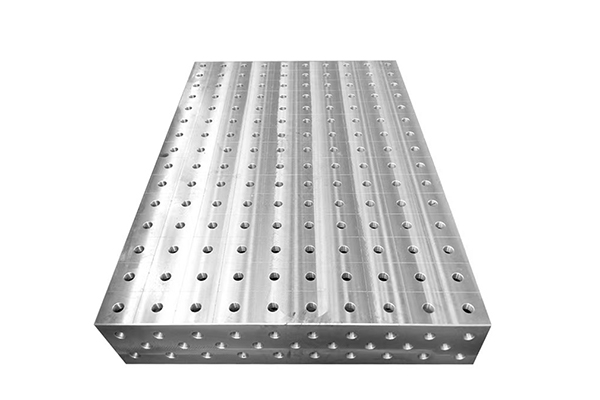
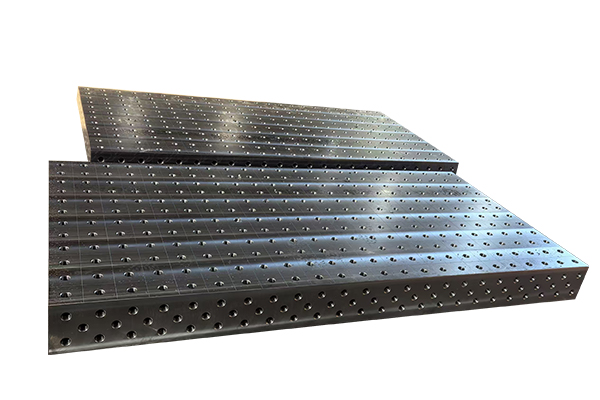
A hole-based flexible welding platform generates a component inventory that can easily number in the hundreds of individual pins, supports, brackets, and clamps. Without an organized storage system, these components accumulate in a disorganized heap that makes retrieval time-consuming and increases the risk of using the wrong component in a fixture. The factories that get the most value from their platforms invest in organized storage from the beginning - shadow-board drawers or bins sorted by component type, labeled with the manufacturer's part number and size specification, and managed with a simple first-in-first-out discipline. A technician who can retrieve any component in under 30 seconds is the one who achieves the 25-minute changeover times the system is capable of delivering.
Training Operators on Platform Discipline
Operator discipline is the variable that most affects whether a hole-based flexible welding platform delivers its theoretical performance or falls short of it. The platform's precision depends on practices that may feel unfamiliar to operators accustomed to general-purpose tables: always seating pins fully into holes before moving on, cleaning debris from holes before every fixture build, tightening clamps to specified torque rather than estimated feel, and verifying datum positions with a measuring tool rather than eyeballing alignment. None of these practices are difficult, but they require consistent application. The factories that see the best results build these practices into their standard operating procedures from day one and reinforce them through regular verification audits until they become habit.
Connecting the Platform to Digital Workflow Systems
Modern manufacturing environments increasingly connect fixturing into broader digital workflows through setup sheets, manufacturing execution systems, and digital work instructions. A hole-based flexible welding platform integrates naturally into these systems because its grid-based datum system produces coordinate-based setup data that translates directly into digital formats. Setup sheets can reference grid coordinates for each component position, making the fixture build instructions unambiguous and transferable between shifts. Some factories with more advanced digital infrastructure have gone further, linking fixture configuration data to their MES so that when a work order is released, the system automatically presents the correct fixture setup record to the operator at the platform.
Measuring Integration Success with the Right Metrics
After a hole-based flexible welding platform is integrated into production, the factory needs metrics that reveal whether the investment is performing as expected. Setup time tracked per part number shows whether changeover discipline is improving. First-pass yield at the welding stage shows whether fixture accuracy is translating to quality results. Floor space freed up by retiring legacy fixtures shows the asset optimization contribution. Scrap and rework rates at downstream inspection stages show whether consistent fixturing is improving overall product quality. Collecting these metrics from the beginning and tracking them monthly gives the implementation team objective evidence of value delivery and identifies areas where additional refinement is needed.
FAQ: Hole-based Flexible Welding Platform System Integration
How long does a typical platform integration take?
A phased integration typically spans three to four months: one month for physical installation and initial training, one to two months for parallel operation proving priority part numbers, and one month for full migration. The exact timeline depends on the number of part numbers to migrate and the complexity of the initial target applications.
Should we retire all our existing fixtures when we bring in a new platform?
No. Keep existing fixtures for the highest-volume single parts where dedicated tooling genuinely offers faster cycle times. A hole-based flexible welding platform handles everything else - the mixed-variety, lower-volume, and prototype work where flexibility delivers the most value. Retiring all existing fixtures prematurely often creates problems that take months to resolve.
What is the most common integration mistake?
Underinvesting in operator training and setup documentation. Factories that skip thorough training and jump straight into production often see inconsistent results that create skepticism about the platform's value. That skepticism is difficult to overcome even after the underlying issues are eventually fixed.
How does the platform connect to existing quality documentation?
The platform's grid coordinate system generates naturally documentable setup data. Grid coordinates for each component position can be recorded in standard setup sheets, linked to work orders in an MES, and used as the basis for digital work instructions. The key is establishing the grid-to-part-datum alignment during initial setup so all downstream documentation references a consistent coordinate frame.
Conclusion
Integrating a hole-based flexible welding platform into an existing welding operation succeeds when the implementation team addresses the human and procedural dimensions as carefully as the technical ones. Mapping datum systems to existing quality conventions, running parallel operations during transition, establishing organized component storage, training operators in platform-specific disciplines, connecting to digital workflows where possible, and measuring results with the right metrics - these practices distinguish implementations that transform production capability from those that create expensive confusion. The platform itself is a tool; the integration is what determines whether that tool delivers on its promise.
References
Bi, Z.M. and Zhang, W.J. (2001). Flexible fixture design and automation: Review and future directions. International Journal of Advanced Manufacturing Technology, 17(4), 266-277.
Nee, A.Y.C., Kumar, S. and Prombanpong, S. (1991). A feature-based classification scheme for fixtures. International Journal of Machine Tools and Manufacture, 31(1), 1-13.
Wang, Y. et al. (2019). Distortion mitigation in automotive welding through optimized clamping sequences. Journal of Materials Processing Technology, 270, 188-199.
Rong, Y. and Bai, Y. (2000). Modular fixture element assembly and accuracy analysis. International Journal of Production Research, 38(14), 3103-3114.
 Recommended Products
 Contact Us
—— Hotline:+86 13833738896
—— Hotline:+86 17332777263
—— Email:gongliliangju@163.com
—— Whatsapp:+8615832706206
—— Whatsapp:+8615931710409
—— Address:Beihan Village, Haocun Town, Botou City, Cangzhou City, Hebei Province, China